Why Passport Readers Are Becoming Increasingly Essential in the Era of Digital Transformation
2026-03-13Why Passport Readers Are Becoming Increasingly Essential in the Era of Digital Transformation
As global digital transformation accelerates, identity verification has become a foundational capability across industries. From international travel and hotel check-ins to bank account opening and SIM card registration, identity authentication is no longer a secondary process—it is a core requirement for compliance, security, and operational efficiency. Against this backdrop, passport readers are emerging as critical infrastructure components within modern digital identity ecosystems.
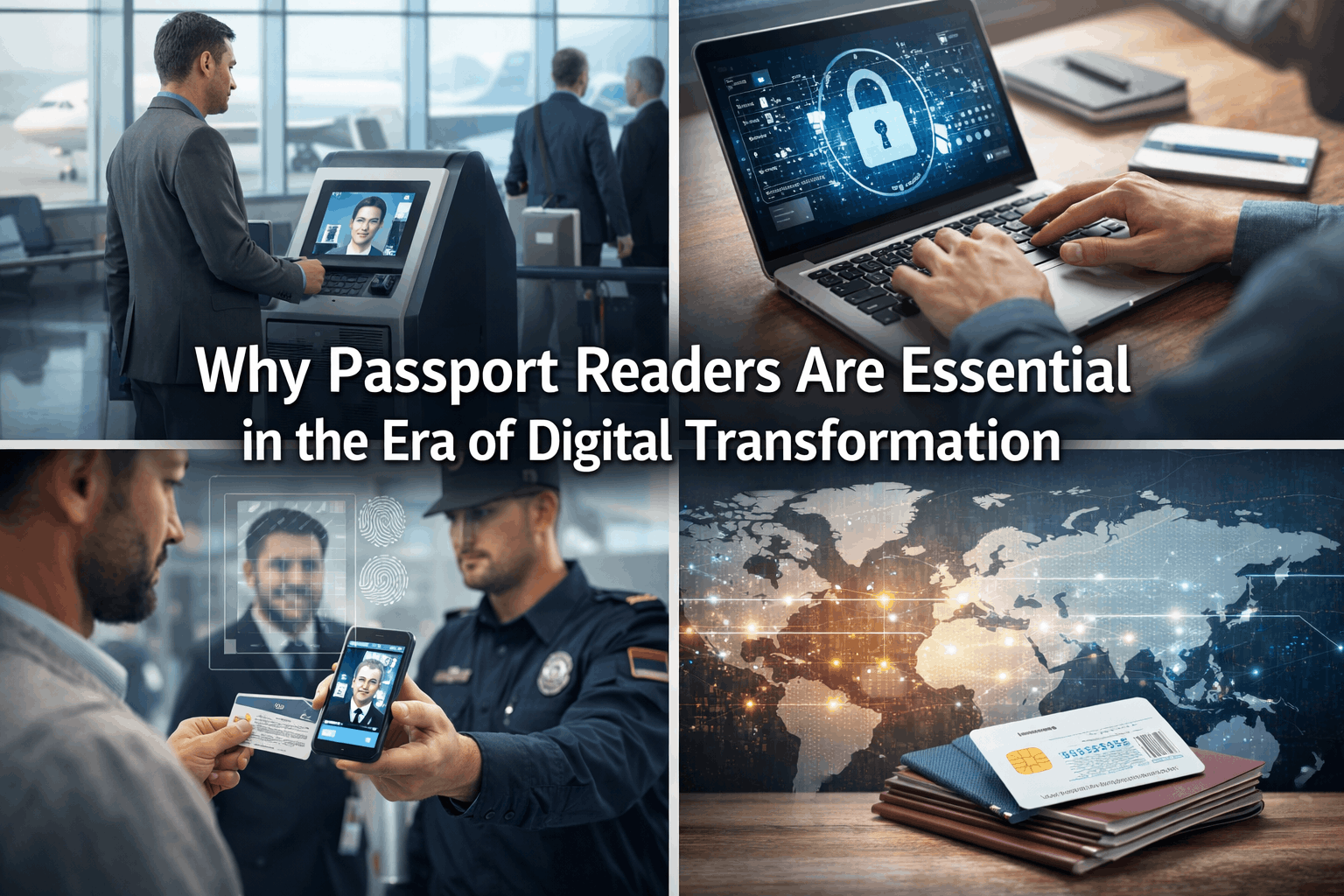
Digitalization and Automation Demand Higher Accuracy and Speed
Traditional manual entry of passport or ID information is increasingly incompatible with today’s fast-paced service environments. Manual input is time-consuming, error-prone, and inefficient, particularly in high-volume scenarios such as airports, hotels, government offices, and telecommunications service centers.
Modern passport readers leverage advanced OCR (Optical Character Recognition), MRZ (Machine Readable Zone) decoding, and RFID chip reading technologies to automatically capture and verify identity data within seconds. This automation significantly reduces human error, accelerates processing time, and ensures standardized data collection. In high-traffic environments where every second matters, such efficiency is no longer optional—it is essential.
The Rise of Self-Service and Unmanned Operations
Self-service models are reshaping industries worldwide. Airports deploy self-check-in kiosks, hotels adopt self-service check-in terminals, and government agencies introduce automated service counters. These systems rely on reliable identity capture technology to function seamlessly.
Passport readers play a pivotal role in enabling these unmanned or semi-automated service environments. Integrated into kiosks, gates, or compact terminals, they provide fast, contactless identity verification without the need for manual intervention. This not only enhances user experience but also reduces operational costs and dependency on front-line staff.
As global labor costs rise and customer expectations increase, the transition toward automated identity verification systems will continue to accelerate. Passport readers are fundamental enablers of this transformation.
Strengthening Compliance and Data Security
Governments and regulatory bodies worldwide are tightening requirements related to identity verification, anti-money laundering (AML), counter-terrorism financing (CTF), and data protection. Industries such as banking, telecommunications, immigration, and public services must ensure accurate, traceable, and legally compliant identity validation processes.
Passport readers that comply with ICAO standards and support RFID chip authentication provide a higher level of security compared to manual inspection. By validating both printed data and embedded electronic chip information, these devices significantly reduce the risk of fraud or forged documents.
Moreover, as data localization and privacy regulations become stricter, many organizations prefer solutions that process sensitive information locally rather than transmitting it to external servers. Secure passport readers equipped with encryption and local processing capabilities address these compliance concerns while maintaining operational efficiency.
Edge Computing and Built-In Intelligence
The evolution of edge computing is another major trend shaping the future of identity verification. Rather than relying solely on centralized servers, intelligent devices are increasingly capable of performing complex processing locally.
Next-generation passport readers equipped with built-in AI or edge computing capabilities can complete OCR recognition, data validation, and even preliminary verification directly on the device. This reduces system latency, enhances stability, and minimizes network dependency. It also strengthens data security by limiting exposure of sensitive identity information.
Such intelligent, standalone devices represent a shift from simple scanning tools to autonomous identity processing terminals—making them more resilient and adaptable to various deployment environments.
Expanding Global Demand and Emerging Markets
Beyond traditional border control applications, passport readers are increasingly being adopted in emerging markets where digital infrastructure is rapidly developing. Tourism recovery, international mobility, telecom subscriber verification, and financial inclusion initiatives are all driving demand for reliable identity capture solutions.
Hotels, financial institutions, visitor management systems, telecom operators, and government agencies are incorporating passport readers into their workflows as part of broader digital modernization efforts. In many regions, identity verification is not just a procedural requirement—it is a regulatory mandate.
From Scanning Device to Digital Identity Gateway
Looking ahead, passport readers will no longer be viewed merely as data capture tools. Instead, they are becoming gateways to comprehensive digital identity ecosystems. By linking physical identity documents with digital platforms, databases, and verification systems, passport readers serve as the critical bridge between the physical and digital worlds.
Under the combined influence of automation, compliance, edge intelligence, and digital transformation, the importance and necessity of passport readers will continue to grow. They are not simply hardware devices; they are strategic components in building secure, efficient, and future-ready identity verification infrastructures.